Archives
- 2018-07
- 2019-04
- 2019-05
- 2019-06
- 2019-07
- 2019-08
- 2019-09
- 2019-10
- 2019-11
- 2019-12
- 2020-01
- 2020-02
- 2020-03
- 2020-04
- 2020-05
- 2020-06
- 2020-07
- 2020-08
- 2020-09
- 2020-10
- 2020-11
- 2020-12
- 2021-01
- 2021-02
- 2021-03
- 2021-04
- 2021-05
- 2021-06
- 2021-07
- 2021-08
- 2021-09
- 2021-10
- 2021-11
- 2021-12
- 2022-01
- 2022-02
- 2022-03
- 2022-04
- 2022-05
- 2022-06
- 2022-07
- 2022-08
- 2022-09
- 2022-10
- 2022-11
- 2022-12
- 2023-01
- 2023-02
- 2023-03
- 2023-04
- 2023-05
- 2023-06
- 2023-07
- 2023-08
- 2023-09
- 2023-10
- 2023-11
- 2023-12
- 2024-01
- 2024-02
- 2024-03
- 2024-04
- 2024-05
- 2024-06
- 2024-07
- 2024-08
- 2024-09
- 2024-10
- 2024-11
- 2024-12
- 2025-01
- 2025-02
- 2025-03
-
In particular we focused our attention on beta adrenergic re
2025-03-01
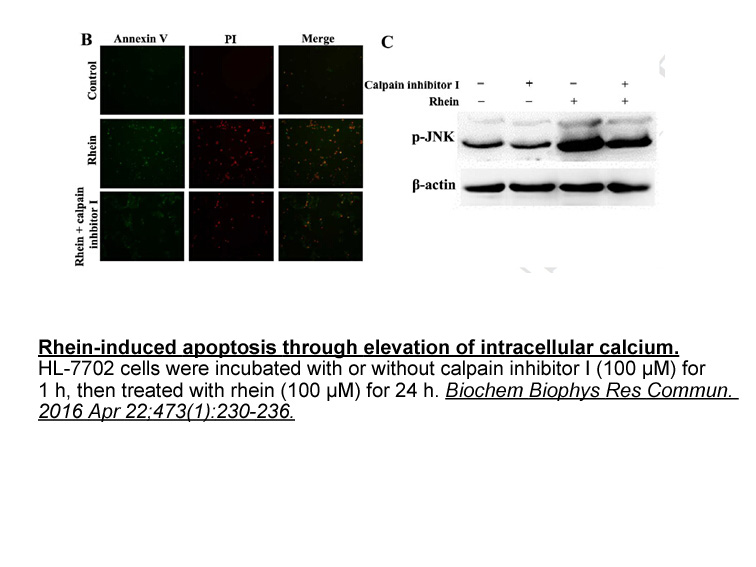
In particular, we focused our attention on beta2 adrenergic receptors, since their commercial inhibitors are effective in lowering IOP, the primary indication of glaucoma. The hypotensive action of a commercial sequence of beta2 adrenergic receptor siRNA was tested in rabbits. The results confirmed
-
br Concluding Remarks The effects of point mutations
2025-03-01

Concluding Remarks The effects of point mutations of the four ARs on ligand binding affinities, functional potencies, and efficacies constitute a valuable source of pharmacological information. We analyzed the existing data and mapped it on the collection of available AR crystal structures, allow
-
Furthermore we found up regulated
2025-03-01

Furthermore, we found up-regulated protein and mRNA levels of adenosine kinase in mouse retina with TON. The up-regulation of ADK was previously demonstrated in diabetic retinopathy (Pang et al., 2010). Greater levels of ADK in activated macrophages and microglial cells abrogate the immune response.
-
Changes in actin microfilaments are
2025-03-01
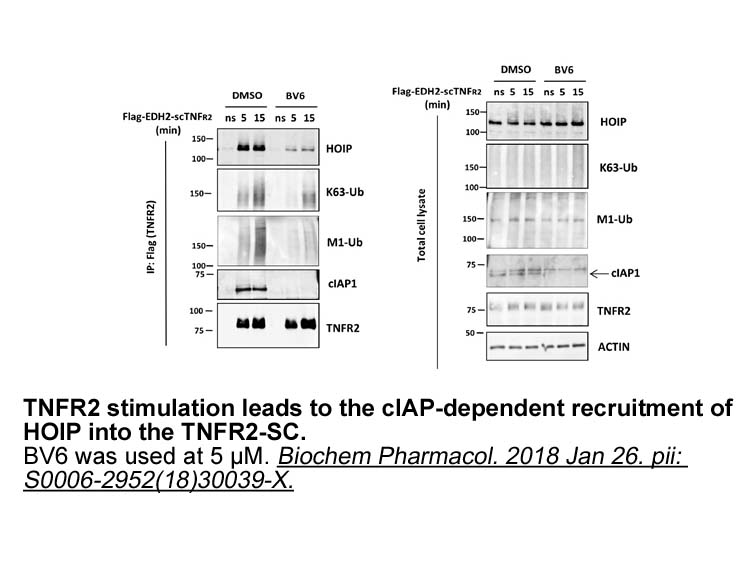
Changes in Probenecid microfilaments are mediated by changes in extracellular matrix, mechanical stimulation or growth factors intracellular signaling. We observed significant changes in a number of intracellular signaling pathways associated with changes in actin dynamics during hMSCs differentiat
-
In brief serotonin can interact with
2025-02-28
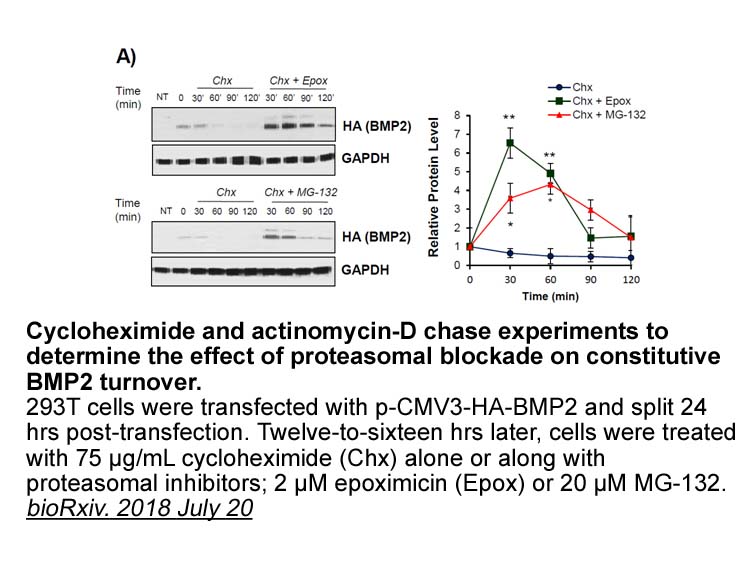
In brief, serotonin can interact with 7 classes of receptors are differentiated into 14 subtypes (Barnes and Sharp, 1999). Specifically, 5-HT1A and 5-HT2C receptors have been the most widely studied in the modulation of anxiety responses (Deakin et al., 1992; Millan, 2003). However, the studies that
-
Physiology genetics and biochemistry of CYP A br Clinical pr
2025-02-28
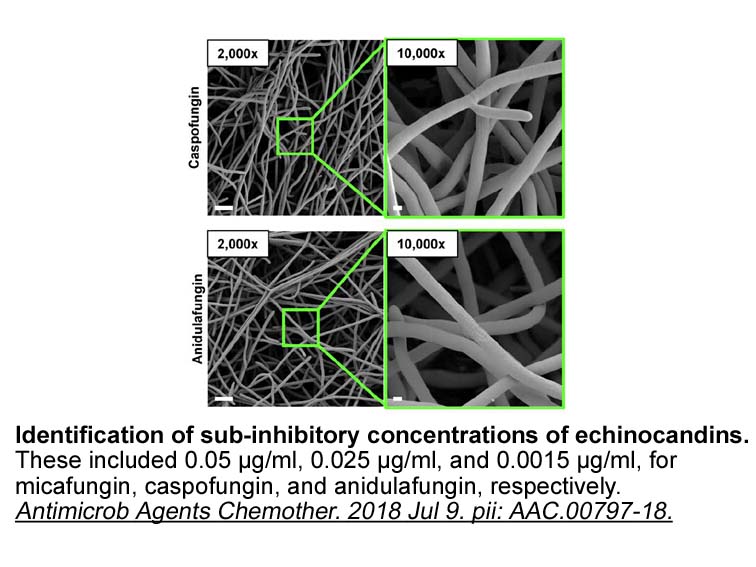
Physiology, genetics, and DL-α-Hydroxyglutaric acid disodium salt of CYP17A1 Clinical presentation and diagnosis Treatment Acknowledgements I thank Dr. Hwei-Ming Peng for assistance with preparing Fig. 3. This work was supported by grant R01GM086596 from the National Institutes of Health.
-
Phospholipases cleave membrane phospholipids from inflammato
2025-02-28

Phospholipases cleave membrane phospholipids from inflammatory cells, activated platelets, erythrocytes, adipocytes and cancer boc boc (Aoki et al., 2008, Neidlinger et al., 2006). Several reports have analysed the role of LPA and its receptors in the pathogenesis of RA. Zhao et al. reported that
-
salinomycin br Expression of autotaxin in cancer Autotaxin
2025-02-28
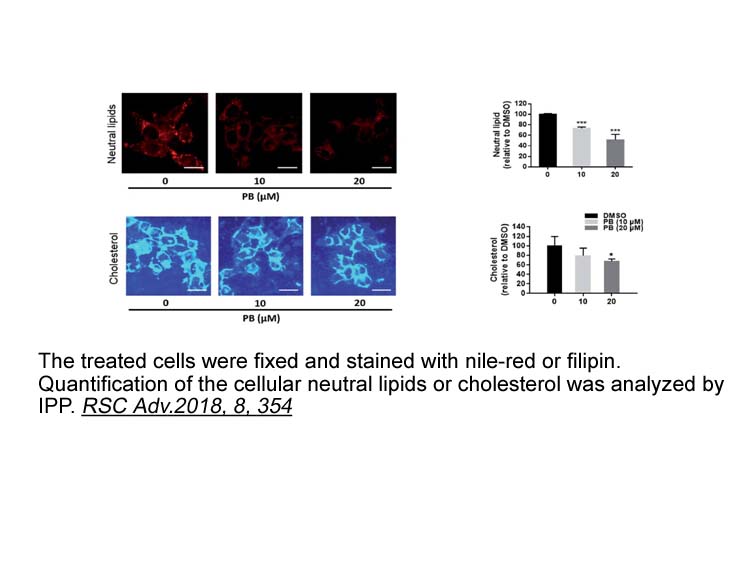
Expression of autotaxin in cancer Autotaxin (ATX) is a member of the family of NPPs (Nucleotides pyrophosphatases phosphodiesterases (NPP) family with a unique lysophospholipase D (lysoPLD) activity, allowing the synthesis of LPA from lysophospholipid precursors such as the lysophosphatidylcholin
-
br Conflicts of interest br Introduction Phosphatidic acid p
2025-02-28
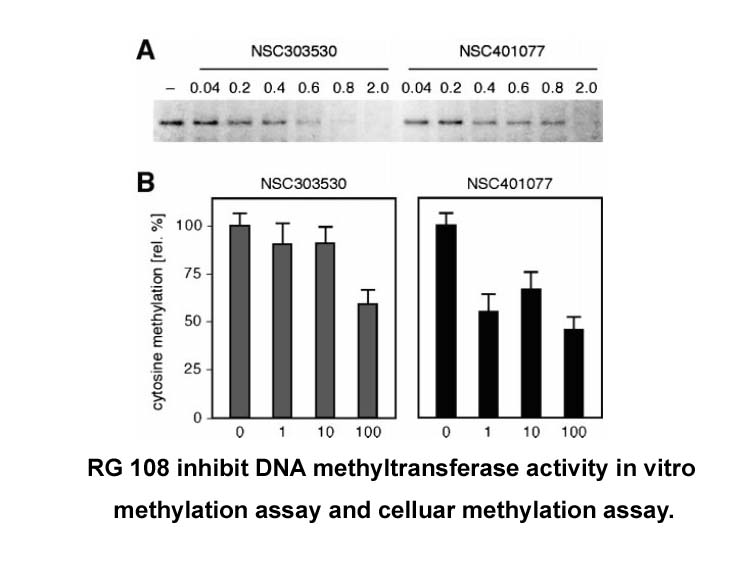
Conflicts of interest Introduction Phosphatidic T-0156 hydrochloride phosphatase (PAP) enzymes are responsible for catalyzing the reaction that dephosphorylates phosphatidic acid (PA), which in turn produces diacylglycerol (DAG) and a phosphate group during phospholipid regulation (Fig. 1A) [1
-
br Breast cancer The interactions between LOX and
2025-02-28
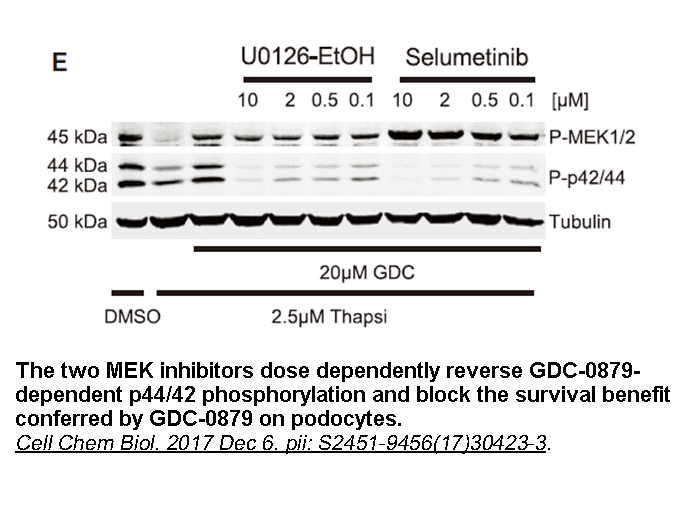
Breast cancer The interactions between 15-LOX and COX enzymes also affect the outcome of breast cancer. Indomethacin, a COX-1 and COX-2 inhibitor, decreased the growth of human breast cancer (BC) cells in nude mice, as well as slowed the rate of lung metastasis formation [41]. The levels of 12-HE
-
br Results br Discussion ER and GR play
2025-02-28
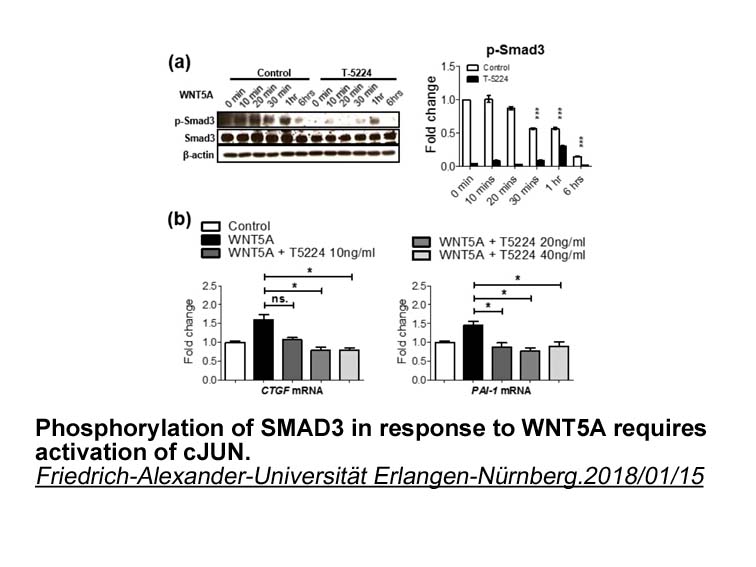
Results Discussion ER and GR play opposite phenotypic roles in the normal endometrium, with ER promoting growth and GR inhibiting growth. Here, we show that in endometrial cancer, GR expression is associated with worse outcomes and higher-grade tumors, and this association is observed only in
-
It has been proven that
2025-02-28
It has been proven that genetic polymorphisms can play an important role in development of hypertension and CVDs. In a Turkish population-based study, it was found that the APLNR gene (rs948847-A445C) polymorphism was not associated with coronary artery disease (CAD), but it was shown to be related
-
DL-AP5 Sodium salt The electrokinetic remediation technique
2025-02-28

The electrokinetic remediation technique is carried out with a low-level direct current, and the pollutants in soil can be transported and removed by the electric field [19]. This works well even in soil with low permeability via electro-osmotic flow and electro-migration [20]. The electrokinetic pr
-
Although it is not known
2025-02-28
Although it is not known if CP-AMPAR regulation is required for LTD, our previous characterization of AKAP150ΔPIX knockin mice that are selectively deficient in CaN anchoring, due to disruption of a PxIxIT-type CaN docking motif, provided important insights. We found that AKAP-CaN signaling dephosph
-
Through an extensive SAR optimization campaign with the
2025-02-28
Through an extensive SAR optimization campaign with the 4-((2-hydroxy-3-methoxybenzyl)amino)-benzenesulfonamide-based scaffold researchers have developed ML355 ((N-benzo[d]thiazol-2-yl)-4((2-hydroxy-3 methoxybenzyl)amino)benzenesulfonamide) [5]. ML355 is a nonreductive, noncompetitive, reversible 12