Archives
- 2026-08
- 2026-07
- 2026-06
- 2026-05
- 2026-04
- 2026-03
- 2026-02
- 2026-01
- 2025-12
- 2025-11
- 2025-10
- 2025-09
- 2025-03
- 2025-02
- 2025-01
- 2024-12
- 2024-11
- 2024-10
- 2024-09
- 2024-08
- 2024-07
- 2024-06
- 2024-05
- 2024-04
- 2024-03
- 2024-02
- 2024-01
- 2023-12
- 2023-11
- 2023-10
- 2023-09
- 2023-08
- 2023-07
- 2023-06
- 2023-05
- 2023-04
- 2023-03
- 2023-02
- 2023-01
- 2022-12
- 2022-11
- 2022-10
- 2022-09
- 2022-08
- 2022-07
- 2022-06
- 2022-05
- 2022-04
- 2022-03
- 2022-02
- 2022-01
- 2021-12
- 2021-11
- 2021-10
- 2021-09
- 2021-08
- 2021-07
- 2021-06
- 2021-05
- 2021-04
- 2021-03
- 2021-02
- 2021-01
- 2020-12
- 2020-11
- 2020-10
- 2020-09
- 2020-08
- 2020-07
- 2020-06
- 2020-05
- 2020-04
- 2020-03
- 2020-02
- 2020-01
- 2019-12
- 2019-11
- 2019-10
- 2019-09
- 2019-08
- 2019-07
- 2019-06
- 2019-05
- 2019-04
- 2018-07
-
Communication through GJ channels is regulated
2021-11-16
Communication through GJ channels is regulated at different levels and includes GJ plaque internalization into a single cell. Those vesicles contain the membrane of both cells and th assembled Cx43. The C-terminal domain of Cx43 interacts with different peptides and proteins. However, the internaliz
-
Deoxycorticosterone acetate br Fipronil resistance associate
2021-11-16
Fipronil resistance associated with A2′S and A2′G mutations Fipronil is a second-generation NCA (Fig. 1), and A2′S and A2′G mutations provide a low level of cross-resistance to fipronil (Cole et al., 1995, Gao et al., 2007). As shown in Table 1, the A2′S Deoxycorticosterone acetate confers high
-
p2x receptors In the previous paper we described the design
2021-11-16
In the previous paper, we described the design and synthesis of tricyclic thiazoles as FBPase inhibitors, and a series of SAR studies led to the identification of phosphate 3 and difluoromethylenephosphonate 4 exhibiting potent FBPase inhibitory activities (IC50=13, 47nM, respectively) (Fig. 2). In
-
In conclusion a series of new carboxamido aryl isoxazoles
2021-11-16

In conclusion, a series of new 3-carboxamido-5-aryl-isoxazoles was designed, synthesized and screened for their inhibitory potency against FAAH. Their cytotoxicity was determined and their lipophilicity was calculated. Compounds bearing a 3-substituted biphenyl moiety with high Log values displayed
-
br Materials and methods br Results br
2021-11-16
Materials and methods Results Discussion mmLDL is an important risk factor for cardiovascular disease, but its mechanism is still unclear. Previously, we co-cultured mmLDL with the coronary artery and basilar artery and found that mmLDL could upregulate ETB receptor expression in both [16],
-
In conclusion the most salient observation from
2021-11-16
In conclusion, the most salient observation from this study was that PAE reduced the expression of HDC protein expression in dentate gyrus, cerebral cortex, and cerebellum, but not in the caudate nucleus or ventral hypothalamus. The regional basis for this heightened sensitivity is not known, but it
-
Considering its role in regulating cytoskeletal dynamics the
2021-11-15
Considering its role in regulating cytoskeletal dynamics, the Rho kinase effector ROCK has been particularly implicated in tumor metastasis. The ROCK inhibitors Y27632 and fasudil have been extensively studied in cancer and beneficial effects have been observed in many types of cancers (Kale et al.,
-
Erythromycin Increasing number of experimental data
2021-11-15
Increasing number of experimental data reveal that both ROS and RNS are multifunctional molecules playing a substantial role in plant physiology and particularly in seed biology (Bailly et al., 2008; Šírová et al., 2011; Yu et al., 2014). Dual function of RNS can be described by the model of “nitros
-
In this study we also profiled the expression
2021-11-15
In this study, we also profiled the expression of the transporters in wild-type RBL-2H3 cells, RBL-2H3 Sc98 cells, and rat peritoneal mast cells. OCT1 and PMAT were expressed at high levels in both RBL-2H3 Sc98 and RBL-2H3 cells. However, OCT2 and OCT3 were weakly or least detected in RBL-2H3 Sc98 c
-
Sequences of hexokinases were initially deduced and predicte
2021-11-15
Sequences of hexokinases were initially deduced and predicted based on cDNA clones (Andreone et al., 1989, Schwab and Wilson, 1989, Schwab and Wilson, 1991, Griffin et al., 1991, Thelen and Wilson, 1991). Analysis of genome sequence data identified, in DASA-58 to the 4 expected known hexokinase enzy
-
Similarly Somavarapu and Kepp constructed a PS
2021-11-15
Similarly, Somavarapu and Kepp [29] constructed a PS1 homology model using 4HYG as a template, plus modeling the TM6-TM7 intracellular segment (amino acids 273 to 374). In this study, the authors considered for the first time the mature and immature (not autoproteolyzed) forms of PS1 component, sinc
-
br Financial support This work was
2021-11-15
Financial support This work was supported by Fondation pour la Recherche Médicale (Equipe labellisée, DEQ20150331724), Inserm, University of Lille, and Agence Nationale pour la Recherche (ANR-10-LBEX-46 and ANR-10-INBS-08; ProFI project, “Infrastructures Nationales en Biologie et Santé”; “Investi
-
Fibroblast growth factor receptors FGFRs play an essential r
2021-11-15
Fibroblast growth factor receptors (FGFRs) play an essential role in the regulation of cell survival, proliferation, migration and differentiation. FGFRs are a family of receptor tyrosine kinases (RTKs) exhibiting an extracellular immunoglobulin (Ig)-like ligand binding domain, a transmembrane domai
-
br Conclusions GPCRs are versatile signaling molecules regul
2021-11-15
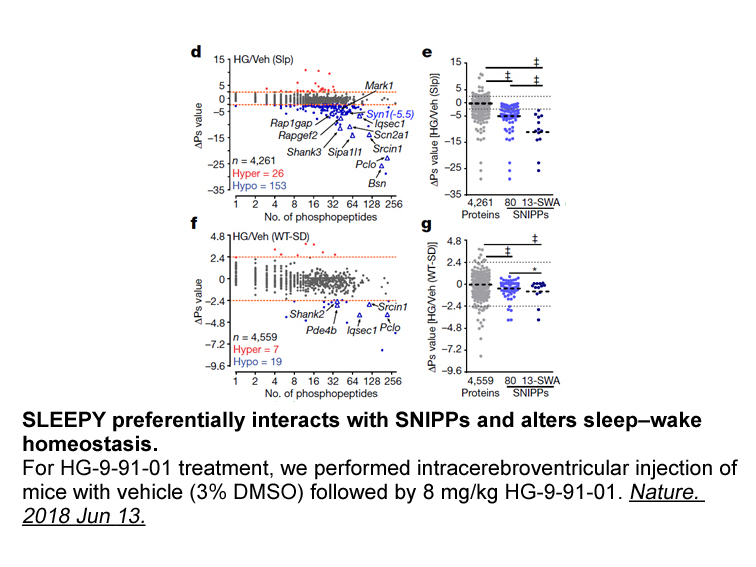
Conclusions GPCRs are versatile signaling molecules regulating almost all physiological processes, including energy homeostasis and glucose homeostasis.105, 106 They also prove to be important therapeutic targets. Drugs targeting GPCRs account for 30% of current pharmaceutical sales. GPR40 is a m
-
br Acknowledgments We thank Prof Alexander D
2021-11-15
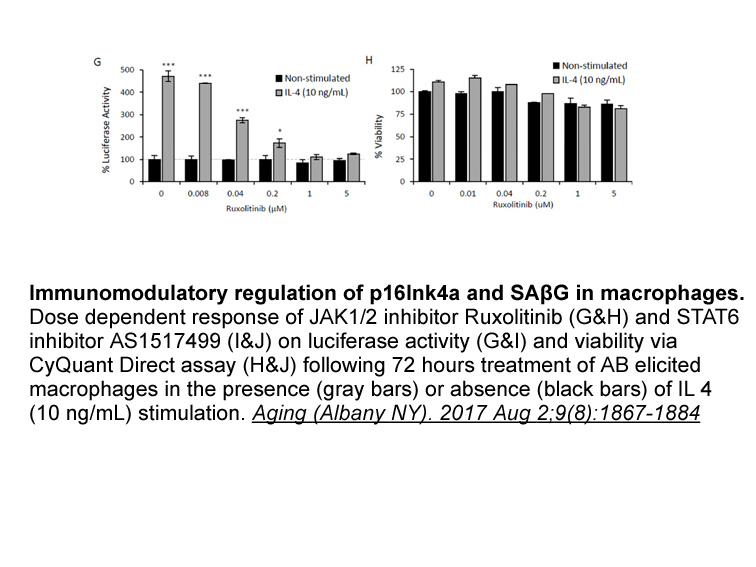
Acknowledgments We thank Prof. Alexander D. Johnson and Suzanne M. Noble for kindly providing SN strains. This work was supported by Chinese National Natural Science Foundation Grants 31370105 and 31300057, and Shanghai STCSM Grant 12JC1409300. Introduction Organisms modulate gene expression
16477 records 597/1099 page Previous Next First page 上5页 596597598599600 下5页 Last page